Share to slack
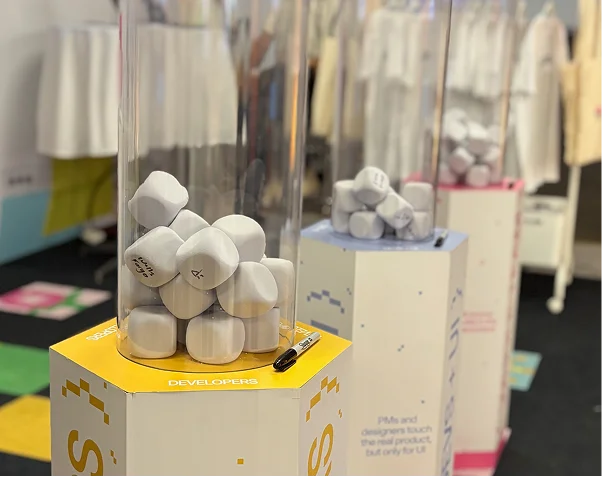
We asked 56 people at ProductCon San Francisco. 22 said developers only, 21 said the whole team, and company size predicted nothing.
The question
This year, a lot of companies gave AI coding tools to the whole product team. Engineers got faster. We wanted to know whether anyone else is using them on the real product.
One question, at our booth at ProductCon San Francisco on October 7, 2026: who on your team is building the real product with AI?
Not who uses AI, and not who prototypes with it. Who changes the product your customers use.
There were three answers to pick from. People picked up a foam cube and dropped it in one of three piles. 56 people voted.
The answers
39%Developers only. 22 Votes
38%The whole team. 21 Votes
23%Developers and design. 13 Votes
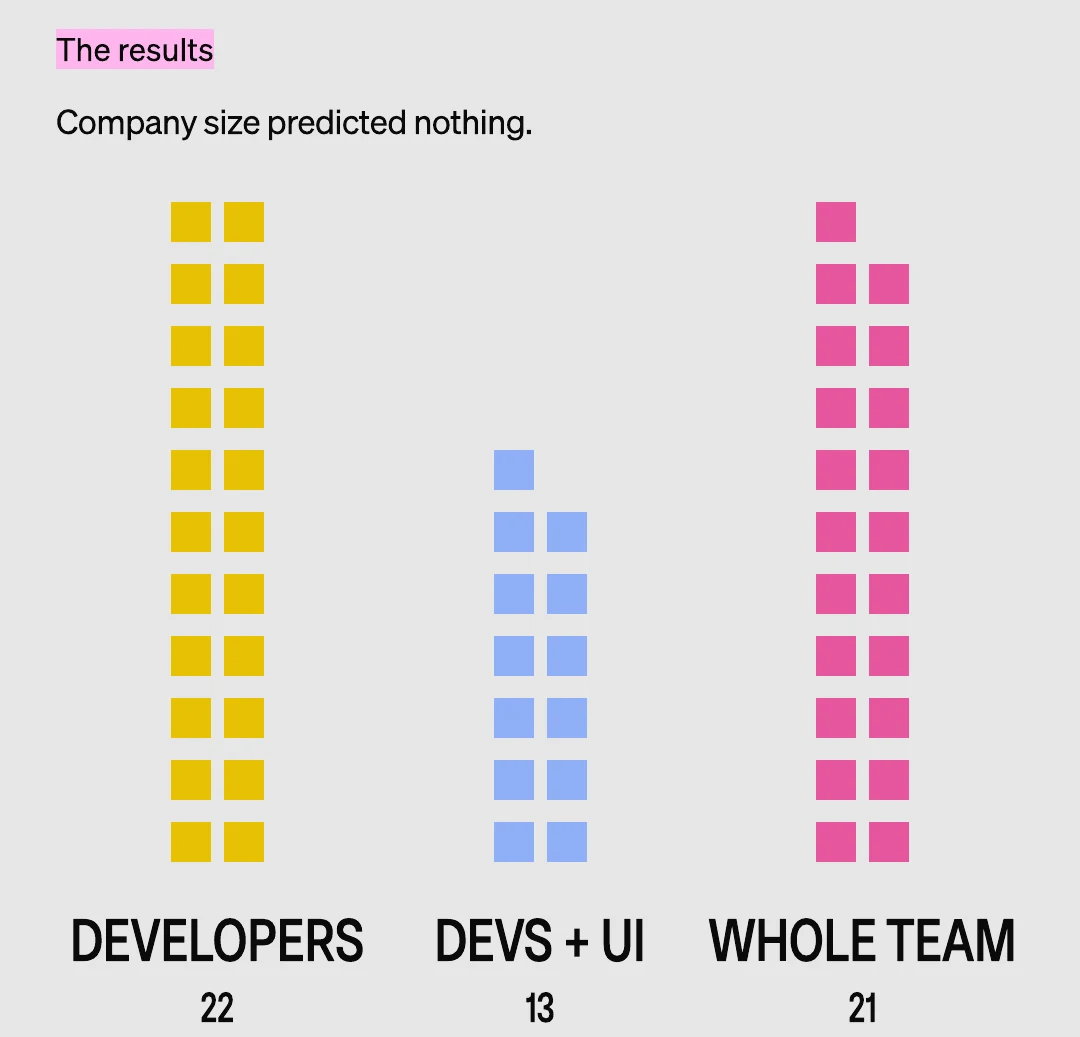
34 of the 56 said someone besides developers is already building the real product with AI. "Developers only" was the biggest single pile, but it's a minority.
Did company size make a difference?
No. Global banks and small startups landed in the same piles. We expected large companies to say "developers only" and small ones to say "the whole team." That isn't what happened.
The pairs who disagreed
This happened three times. Two people from the same company, asked the same question a few minutes apart, dropped their cubes in different piles.
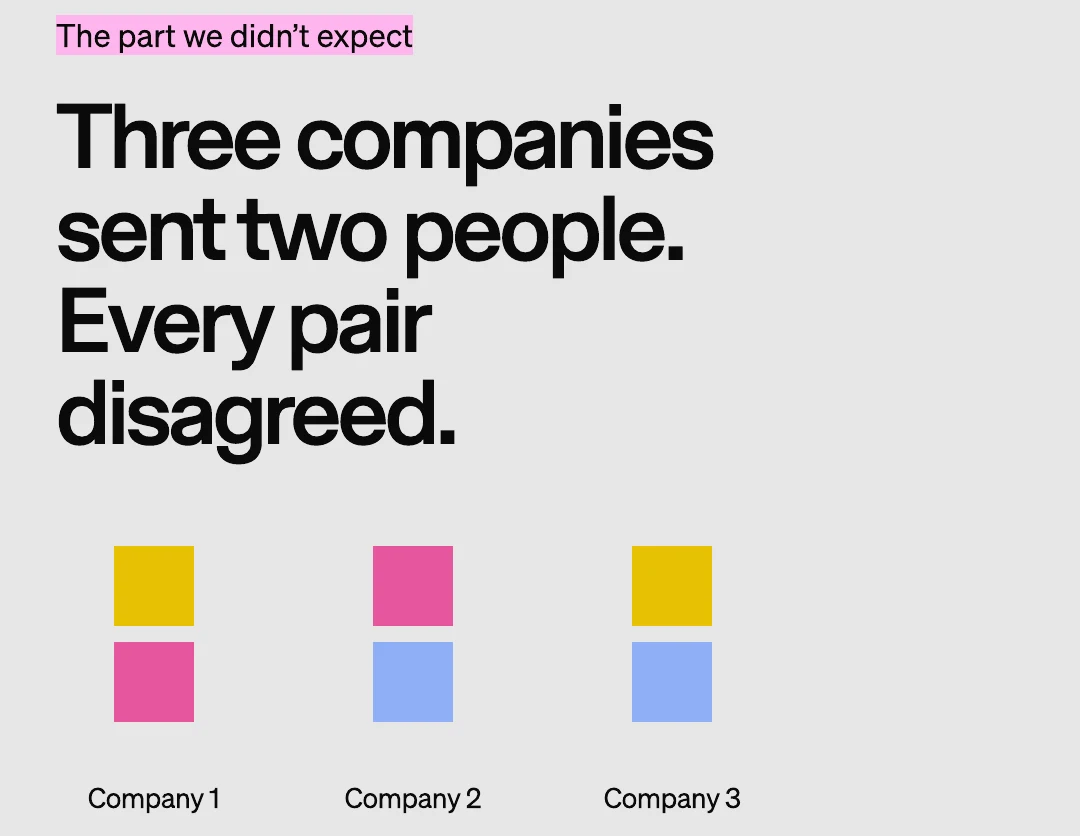
Our read: neither of them was wrong. When a company doesn't build a safe way into the product code for everyone, each team builds its own. A designer in one group has found a way in. A PM in the next group hasn't. Ask them who builds the real product, and you get two honest, opposite answers.
What we heard after the vote
The conversations after the vote were more useful than the vote. Two patterns came up again and again:
Some companies built it themselves. They gave everyone a way in, and they pay for it with a dedicated team that designs it, builds it, and keeps it running.
Others didn't, so product leads built their own. It was the fastest thing they could put in place and still hit their numbers. It doesn't scale, it doesn't bring anyone else in, and it usually feels built in a hurry.
Both cost something. Both pull a team away from the work it's there to do.
Where does Spring fit?
Spring is one way into the product code for the whole team. PMs, designers, and writers work on the real product, and every change goes to engineering as a pull request to review and merge. It's the thing the companies in the first pattern built for themselves, without the team to maintain it.
What this doesn't tell us
Each vote was one foam cube, dropped in one of three columns at our booth on October 7, 2026. We didn't record company names, roles, or team sizes for each vote, and the three same-company pairs are ones we noticed at the booth.
It's 56 people who chose to stop at a booth at a product conference. They're more interested in this question than most, and some came because they'd already seen Spring. Read it as a signal from the people closest to the problem, not as a market survey. We'll ask again, with a larger sample, and publish the results here.