Share to slack
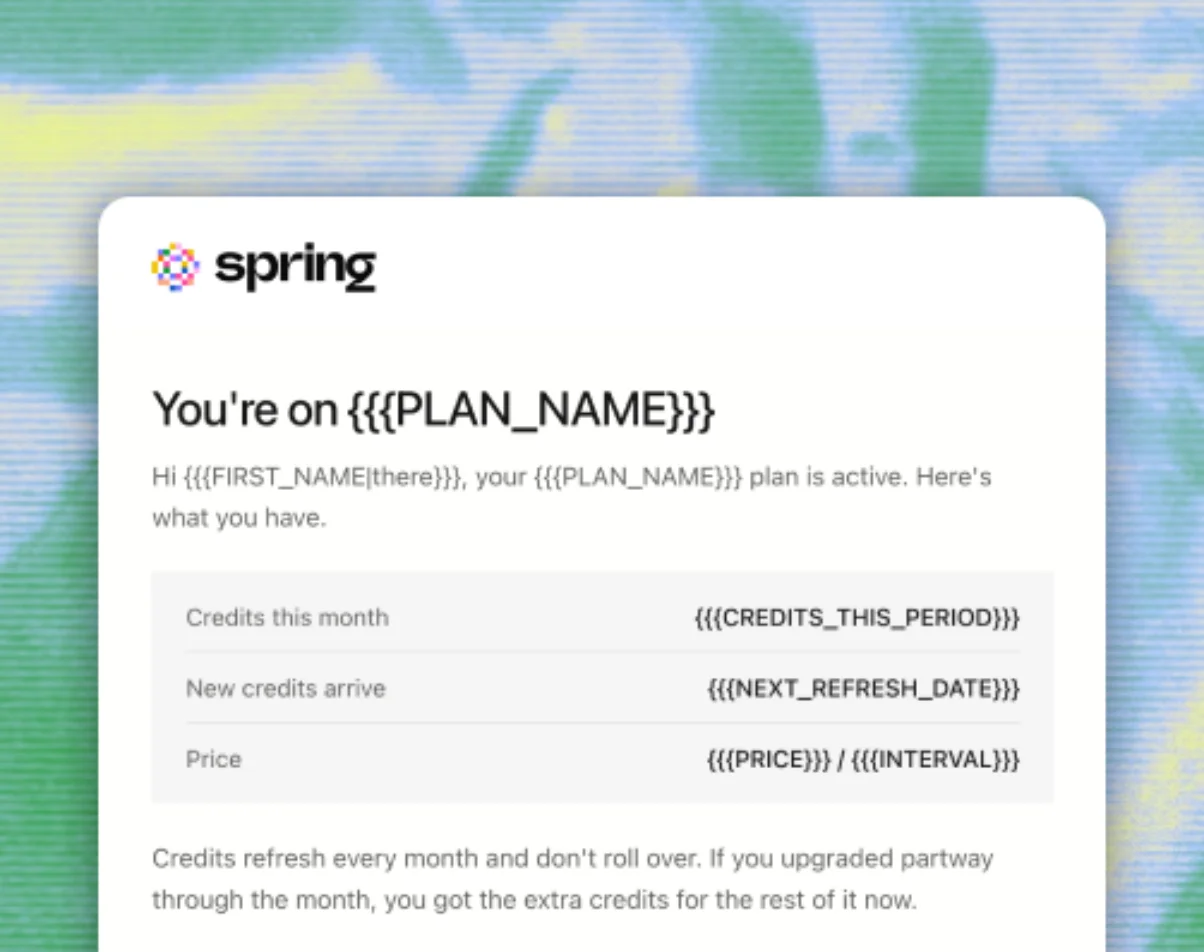
Connecting a payment provider meant a set of customer emails we needed to add. And by "adding" I mean understanding the payment stage, writing the email, designing it, and then building it inside our payment system. I mapped what we had against what the provider requires, then built the missing ones in Spring with one prompt. They used our design system exactly, on the first try. I honestly didn't expect it to go that smoothly.
The task
Payments are always a sensitive area, and as a PM, it's not something I touch every day. The task was connecting Paddle, our payment provider, to Spring.
At first I didn't know what Paddle even requires. Which emails do we need? How does the refund policy work? What has to reach the customer, and when? Every one of those questions came with more questions of its own.
What's ours and what's Paddle's
I started the research with Claude, and it became clear quickly that the payment provider does most of the heavy lifting.
What was left for us to spec was the communication with our customers. What do they need to know as their plan and their payments change, and when? What will keep them calm when a payment fails, or when their access is about to change? Every email had to answer the customer's question before they had to ask it, so nobody is left guessing and fewer questions reach support.
Mapping what we had against what we needed
We already had a few emails designed in Spring, nothing major. Spring has an MCP server, so an assistant like Claude can read what's in Spring and work with it.
I asked Claude to pull our existing emails from Spring, compare them with what Paddle requires, and map what was missing and what we didn't need.
One prompt
Then I wrote one prompt:
"Build the missing emails in Spring"
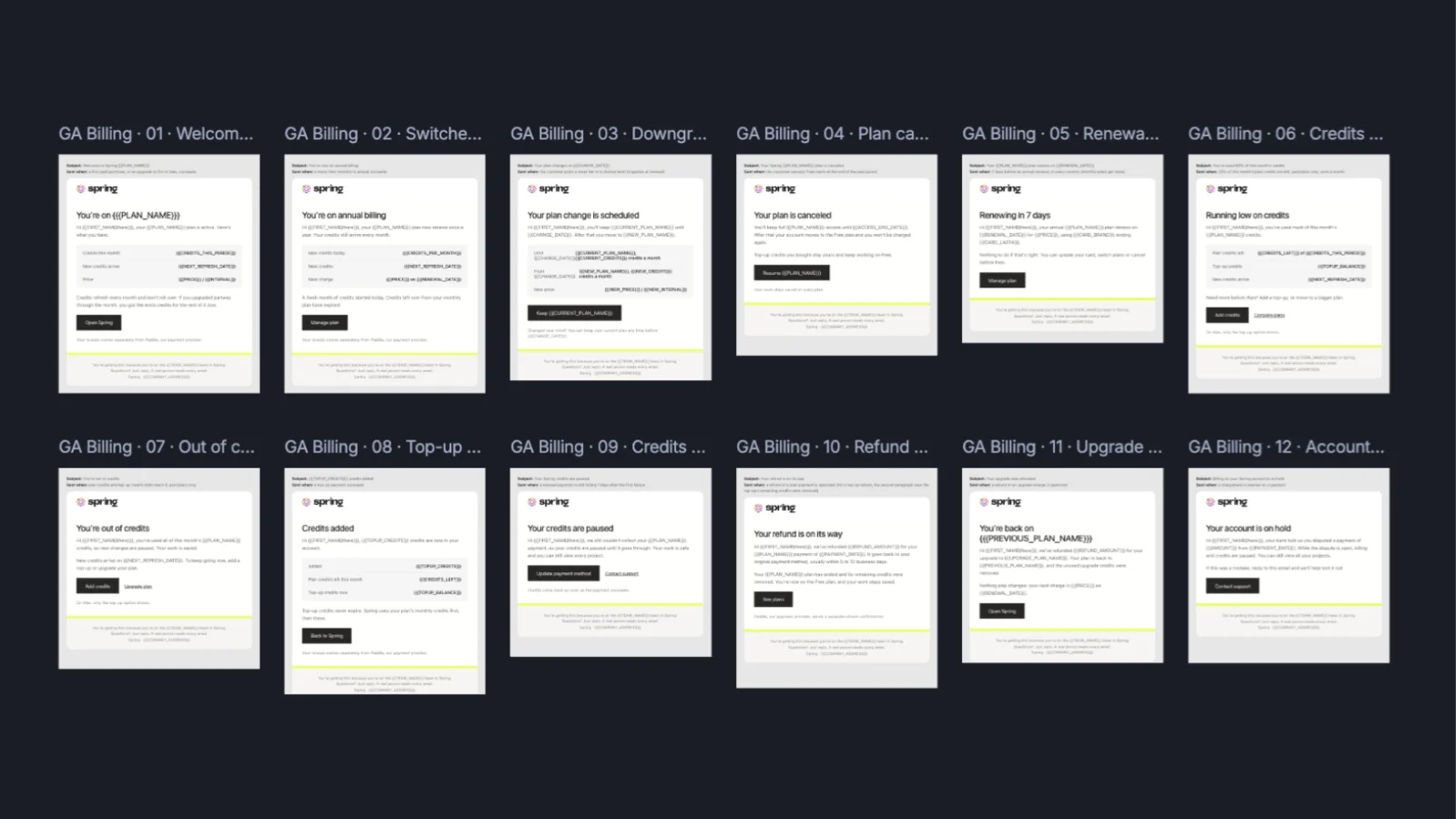
The emails came out using our design system fully and precisely, ready to hand off to our email provider. First try.
They cover every stage a customer goes through, from trying Spring to paying for it, including the moments when something goes wrong.
What I actually did
Work like this usually means copying context between tools: the research in one place, the requirements in another, the designs in a third. This time I didn't copy anything. Claude read our existing emails straight from Spring, and the new ones were built right back in Spring. I didn't have to become an expert in billing emails, or dig into every detail myself.
My job was to check the result: that the emails followed our existing design, and that what was built matched what was designed, with no drift. That's the part a PM should spend time on anyway.
What surprised me
Not much about AI surprises me anymore. I wasn't surprised that it can build emails, or by the MCP itself.
What impressed me was the whole experience: the use case, the output, and how easy it was. I didn't have to trade time for quality. The quality was high and precise, and it took a fraction of the time. It saved me real hours of work, hours I didn't have in the first place. I once saw someone wearing a T-shirt that said "All you need is context." I'm going to get one myself.